From Agreement Bottleneck to 7-Day Activation.
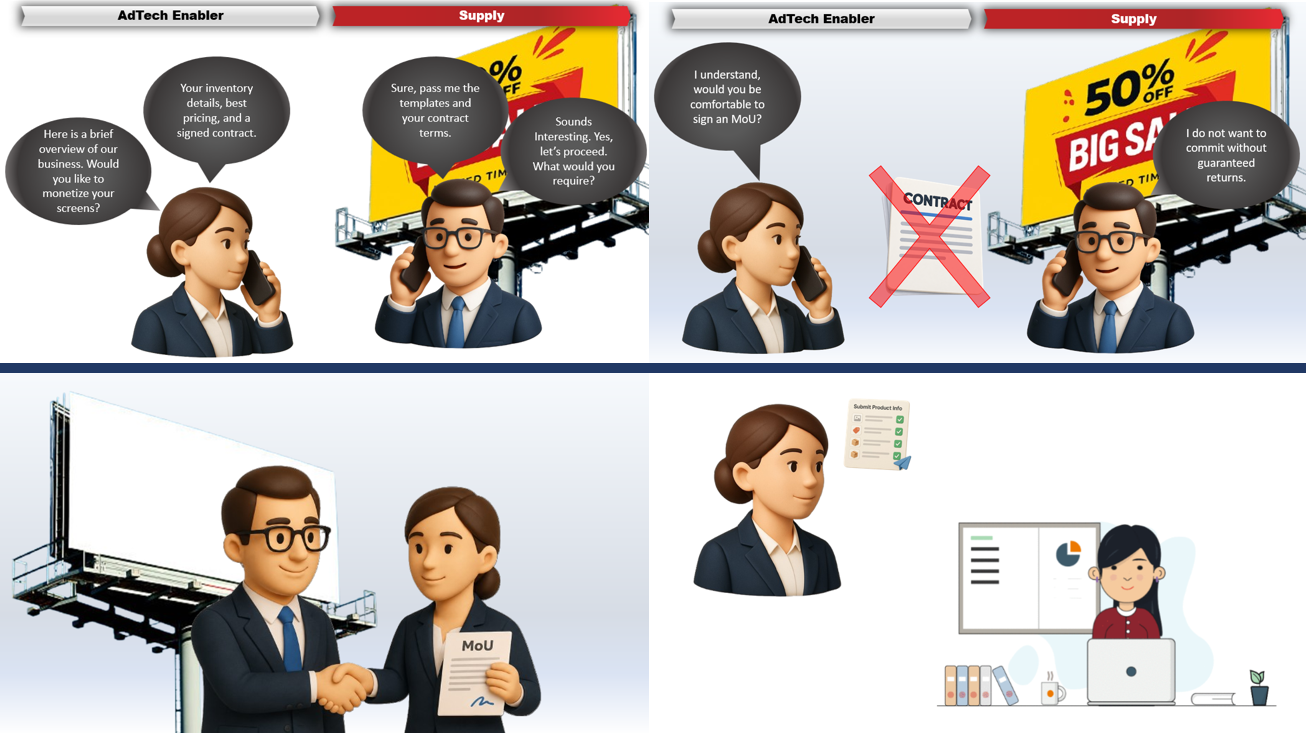
The Publisher Relationship team at a fast-growing AdTech organisation raised concerns about the time it took to onboard new media publishers onto their Supply Side Platform. From first publisher contact to inventory activation, the process was taking between 90 and 180 days to complete.
The primary bottleneck was commercial. Publishers were reluctant to sign a binding Commercial Agreement without guarantees of returns. Negotiations stalled. Decisions were deferred. Inventories sat in the system, onboarded but inactive, waiting on paperwork that neither side could resolve quickly.
Every day an inventory remained inactive was a day of lost monetisation. For premium publishers with high-demand inventory, the revenue window was narrow. Demand existed now, not indefinitely.
The pipeline was growing, but not converting. Publishers entered the process, stalled at the commercial stage, and accumulated in a queue with no mechanism to move them forward. Sales were pitching inventory that existed on the platform but was not yet commercially available. The gap between what the platform held and what it could actually sell had become a credibility risk.
The backlog compounded with every new publisher. More inventory entered the platform without increasing the inventory available to fulfil demand. The result was a widening gap between nominal inventory and tradable inventory. Monetisation was constrained despite the platform appearing to have sufficient supply.
The instinct was to focus on the publishers. The analysis said otherwise.
A deep dive into the end-to-end process conducted across all six contributing teams revealed that the bottleneck was not publisher reluctance alone. It was the structure of the internal process itself. The Commercial Agreement, presented as a rigid, binding contract before any value had been demonstrated, was asking publishers to commit to terms they had no basis to trust yet.
I proposed reengineering the entire Publisher Lifecycle rather than patching the negotiation stage in isolation. Securing executive sponsorship required repositioning the initiative. It was not framed as a process problem. It was framed as a commercial growth lever. Once presented as Publisher Onboarding Cycle Time Reduction and Faster GTM Activation, leadership alignment followed.
With sponsorship secured, I led a cross-functional improvement exercise involving six teams: Publisher Relationship, Onboarding, Data Engineering, Customer Support, AdOps and Legal. Over two months, each process was mapped, responsibilities and accountabilities were reassessed, and handover points between teams were redefined. The most significant change was the introduction of a Memorandum of Understanding. This was my proposal. Rather than requiring publishers to sign a binding contract upfront, the MoU allowed terms to be negotiated case by case based on the specific opportunity. It gave publishers flexibility without removing commercial protection for the organisation.